
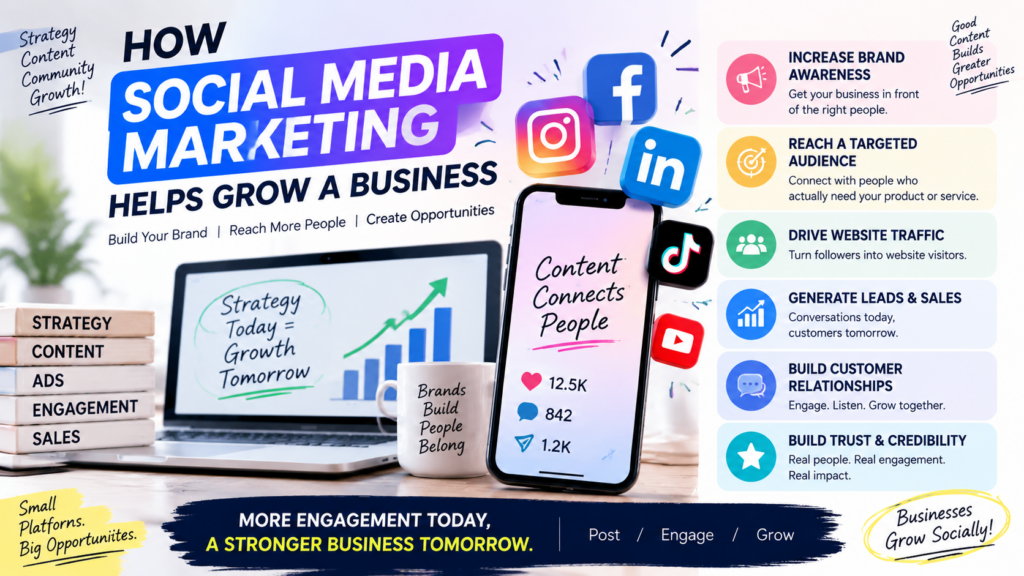
In today’s digital world, social media marketing has become an important part of growing a business online. Platforms such as Instagram, Facebook, LinkedIn, YouTube, and other social networks give businesses opportunities to connect with their target audience, build brand awareness, and generate leads.
Whether you are a small business or an established brand, a strong social media marketing strategy can help you reach more people and build meaningful customer relationships.
What Is Social Media Marketing?
Social media marketing is the process of promoting a business, product, or service through social media platforms. It includes creating and sharing content, engaging with followers, running paid advertisements, and analyzing campaign performance.
The main goal is not only to gain followers but also to create valuable connections that can support long-term business growth.
Why Is Social Media Marketing Important?
People spend a significant amount of time on social media every day. This gives businesses an opportunity to reach potential customers where they already spend their time.
A good social media strategy can help businesses:
- Increase brand awareness
- Reach a targeted audience
- Drive website traffic
- Generate leads
- Increase customer engagement
- Build trust and credibility
- Support sales and conversions
1. Build Brand Awareness
Social media is an effective way to introduce your brand to new audiences. Regularly sharing useful and engaging content can help people recognize and remember your business.
Consistent branding across your social media profiles can also create a stronger and more professional online presence.
2. Reach Your Target Audience
One of the biggest advantages of social media marketing is audience targeting.
Businesses can create content and advertising campaigns based on factors such as:
- Age
- Location
- Interests
- Online behavior
- Professional background
- Customer needs
Understanding your target audience helps you create content that is more relevant and engaging.
3. Increase Website Traffic
Social media can be used to direct users to your website, blog, landing pages, or product pages.
For example, you can share a helpful blog post on LinkedIn or Instagram and encourage your audience to visit your website to learn more.
This can help increase referral traffic and introduce your brand to potential customers.
4. Generate Leads and Customers
Social media platforms can help businesses generate leads through organic content, paid advertising, lead forms, promotions, and direct communication.
A clear call-to-action such as “Learn More,” “Contact Us,” “Shop Now,” or “Get Started” can encourage interested users to take the next step.
5. Build Customer Relationships
Social media is more than a promotional channel. It allows businesses to communicate directly with their audience.
Responding to comments, answering questions, and addressing customer concerns can help create stronger relationships and improve customer experience.
6. Create Engaging Content
Different types of content can be used to keep audiences interested.
Popular social media content formats include:
- Short-form videos
- Images and graphics
- Educational posts
- Tutorials
- Customer testimonials
- Behind-the-scenes content
- Polls and questions
- Infographics
The best content depends on your audience, industry, and marketing goals.
7. Use Paid Social Media Advertising
Organic content can help build a community, while social media advertising can help businesses reach specific audiences more quickly.
Paid campaigns can be used for goals such as:
- Brand awareness
- Website traffic
- Lead generation
- App promotion
- Product sales
- Retargeting
Businesses should monitor campaign performance and optimize their advertising based on results.
8. Measure Social Media Performance
Tracking performance helps marketers understand which content and campaigns are producing results.
Important social media marketing metrics include:
- Reach
- Impressions
- Engagement rate
- Follower growth
- Website clicks
- Leads
- Conversions
- Cost per result
- Return on ad spend (ROAS)
Analyzing these metrics can help businesses improve their social media strategy.
How to Create a Simple Social Media Marketing Strategy
A beginner-friendly strategy can follow these steps:
Set Goals → Know Your Audience → Choose Platforms → Create Content → Publish Consistently → Engage → Analyze → Improve
Start by defining what you want to achieve. Then identify your target audience and choose platforms that are relevant to them.
Create useful content, maintain a consistent posting schedule, interact with your audience, and regularly analyze your results.
Social Media Marketing Tips for Beginners
If you are starting social media marketing, keep these tips in mind:
- Know your target audience.
- Choose platforms that match your audience.
- Create valuable and original content.
- Maintain consistent branding.
- Use strong visual content.
- Encourage audience interaction.
- Respond to comments and messages.
- Test different content formats.
- Track important performance metrics.
- Improve your strategy based on data.
Final Thoughts
Social media marketing can help businesses build awareness, connect with customers, generate leads, and support long-term growth. However, success does not come from simply posting regularly.
A successful social media strategy focuses on understanding the audience, creating valuable content, choosing the right platforms, engaging with followers, and measuring performance.
With consistency, creativity, and a data-driven approach, social media can become a powerful part of your overall digital marketing strategy.
Frequently Asked Questions
What is social media marketing?
Social media marketing is the use of social media platforms to promote a business, connect with audiences, increase brand awareness, and achieve marketing goals.
Which social media platform is best for business?
There is no single best platform for every business. The right platform depends on your target audience, industry, content type, and marketing objectives.
Can social media marketing increase sales?
Yes. Social media can support sales by increasing brand awareness, generating leads, driving website traffic, promoting products, and building customer trust.
How often should a business post on social media?
There is no universal posting frequency. Businesses should focus on creating valuable content consistently rather than posting only to increase the number of posts.
How can social media marketing success be measured?
Success can be measured using metrics such as reach, engagement, clicks, leads, conversions, and ROAS for applicable paid campaigns.